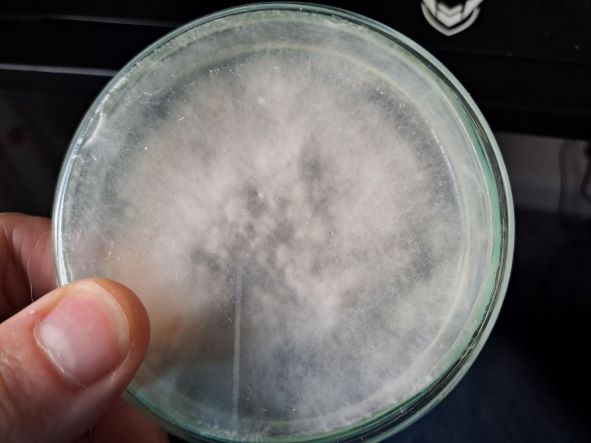
Mushroom gummies are becoming an increasingly popular way to take functional mushrooms. They’re easy to consume, simple to dose, and far more appealing than capsules or strong-tasting teas.
But while mushroom gummies look simple, making them properly takes a little bit of thought to ensure you don’t ruin the compounds which you wish to supplement.
This guide explains how to make mushroom gummies that retain their benefits, explaining the main principles so you can apply the technique to any functional mushroom you see fit.
You don’t need a lab or special equipment just a basic understanding of heat, acidity, and extraction. Quickly let me explain the extraction process and why it is important to understand.
Why Extraction Matters When Making Mushroom Gummies
The first and most important step in the whole process is extracting the compounds from your mushrooms. It is important to do this first when creating mushroom gummies because mushroom compounds need heat and time to properly extract into liquid, while gelatin needs a much lower temperature to bloom, dissolve, and set correctly.
By extracting first, you can use the right conditions to pull the compounds into the water, then move on to the gelatin stage without over- or underheating the mushrooms, which could either destroy the compounds or prevent them from being fully extracted.
Whichever mushroom you’re using, it’s important to research the temperatures needed to extract its key compounds, as well as the point where those compounds begin to degrade. Once you know that range, stay within the extraction range.
Also, a quick note: if you are using fruit juices, as I do in this recipe, be aware that chemicals like citric acid (often found in fruit juices) can affect how some mushroom compounds behave, which can impact storage, stability and absorption. So make sure to research this as well.
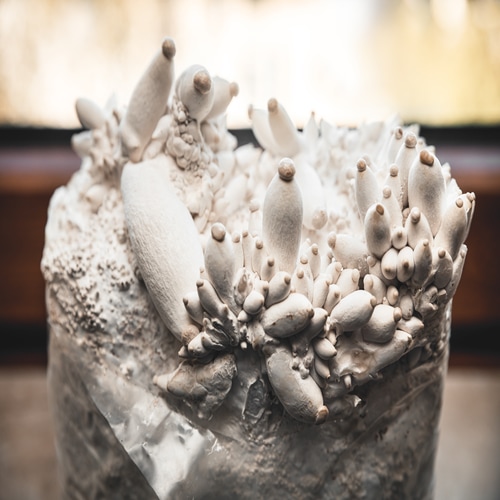
I will be using Cordyceps in the following recipe, trying to extract cordycepin which extracts best between 60–70°C and has no conflicts with acidic fruit juices. However, as long as you follow the general process outlined in this article and use the correct temperature range and extraction times for your chosen mushroom, everything will work fine.
Mushroom Gummies Recipe
Before getting into the instructions, here’s what we are making:
- 126 mushroom gummies
- 2 ml per gummy
- Approximately 800 mg (0.8 g) of Cordyceps militaris extract per gummy
Ingredients
- 100 g Cordyceps militaris powder
- Water / fruit juice (enough to finish at 252 ml extract)
- 20–22 g unflavoured gelatin
- 40–60 g dextrose (adjust to taste)
This recipe uses 100 g of Cordyceps powder, extracted into liquid and evenly distributed across all gummies (252ml).
Mushroom Gummies Calculator
Below is a simple calculator to help you work out the correct final ingredient amounts for your batch. Just enter your mould size, number of gummies, and dosage, and it will generate the final quantities you need.
Note: you’ll still need to extract your mushrooms first using a higher volume of water, then strain and reduce the liquid down to the final volume shown.
Use this calculator to plan your recipe.
Inputs
Extraction Details
This section is for extraction planning. It scales water as 2.5× the final liquid volume as a minimum. Its fine to use more it will just take longer to reduce.
Final Gummy Output
Note: this estimates dosage by distributing powder evenly across gummies. If you’re extracting then straining, “powder used” ≠ guaranteed actives retained.
How To Make Mushroom Gummies
Remember to follow the process in this order the exact recipe can be customised using the calculator above. For the extraction phase, try using roughly 2.5 × the final liquid volume to properly pull the compounds into the water, then strain and reduce it down to your target volume.
Step 1: Extract the Mushrooms
- Heat 500 ml of water to between 60–70°C (use a thermometer to monitor). I like to bring it up to around 67°C, then turn the heat off and put the lid on.
- Add the Cordyceps powder to the water and stir.
- Allow the temperature to fall to 60°C, then turn the heat on again to bring it back up to 67°C.
- Leave the powder in the water for 30 minutes (lid on), stirring occasionally, maintaining the temperatures, top-up the water if required.
- Pour the mixture into a cafetiere, then strain off any excess powder.
- This is now your mushroom extract.
Step 2: Add Ingredients and Reduce
- First, take the “Final liquid needed” number from the calculator above and pour this amount of water into the pot you will use for your reduction. Place a spoon into this liquid and then mark it at the level the water reaches you’ll use this later to measure your reduction.
- Empty the pan, then pour the mushroom extract into it.
- Add the dextrose and fruit juice.
- Heat again to between 60–70°C.
- Maintain this temperature until the liquid reduces down to the point on your spoon that you measured earlier. This should take around an hour or so.
- While you wait, bloom your gelatin.
Step 3: Bloom Gelatin
- Pour 75 ml of cold water into a bowl.
- Sprinkle gelatin evenly over the surface and mix.
- Let it bloom for 10–15 minutes.
Step 4: Combine and Dissolve
- Allow the temperature of the reduction to drop below 60°C.
- Warm the remaining extract gently to 50–55°C.
- Add the bloomed gelatin and stir.
- Keep the temperature below 60°C.
- Allow the mixture to reduce until it reaches the level on the spoon taken earlier.
Step 5: Mold and Set Gummies
- Using a syringe, transfer the extract into the gummy molds.
- Refrigerate for 1–2 hours until fully set.
- Store in an airtight container in the fridge.
Which Mushrooms Are Best for Gummies?
A useful rule of thumb is this mushrooms that have traditionally been used as teas are good candidates for gummies.
Tea use tells you something important the key compounds:
- are water-soluble,
- tolerate gentle heat,
- and extract well into liquid.
Mushrooms commonly used this way include Cordyceps, Reishi, Chaga, and others. This doesn’t mean every mushroom behaves the same, but it’s a strong starting point.
- Cordyceps contains cordycepin and adenosine, which are heat-sensitive nucleosides.
- Reishi contains triterpenes that are far more stable at high heat but sensitive to oxidation.
- Chaga contains melanin and polyphenols that tolerate heat but are pH-sensitive.
If a mushroom has never been used as a tea or decoction, it’s worth doing a bit more research before turning it into a gummy.
Making Gummies with Multiple Mushrooms
It’s completely possible to make gummies using multiple mushrooms for example, Cordyceps + Turkey Tail. To do this properly, you should extract each mushroom at the temperature range it requires.
Start by doing a hot water extraction with the mushroom that needs the highest extraction temperature, then do a second hot water extraction for the mushroom that extracts best at a lower temperature (with the liquid from the first extraction).
Once both extractions are complete, finally add the gelatin.
PH and Chemical Interactions
A lot of gummy recipes use fruit juice, but it’s worth noting that compounds in fruit juice, especially acids like citric acid, can affect the active compounds in some mushrooms. This can impact things like shelf life, dosage consistency, and how quickly the effects come on, so make sure you research this for whichever mushroom you’re using.
Storage and Shelf Life Considerations
Mushroom gummies are not immortal, a good rule of thumb is to consume within 30 days of creation.
Factors that shorten shelf life:
- moisture,
- oxygen exposure,
- light,
- microbial growth.
To improve stability:
- store refrigerated,
- use airtight containers,
- consider antioxidants if scaling up,
- avoid leaving gummies at room temperature long-term.
Final Thoughts
Hopefully you now understand the process of making mushroom gummies at home. As long as you follow the overall method in the correct order, you can customise the recipe for texture and flavour however you like.
Just remember to do your research on your chosen mushroom’s extraction temperature range, and be mindful of ingredients like fruit juice acids if you’re planning to store your gummies for longer periods.